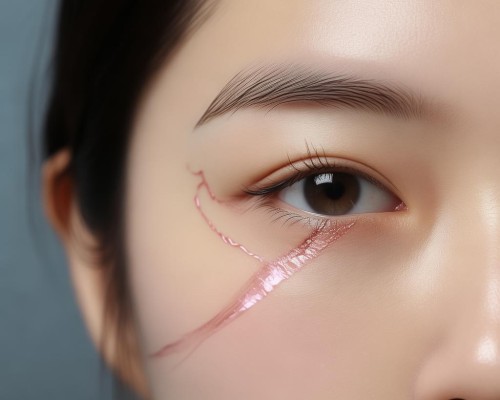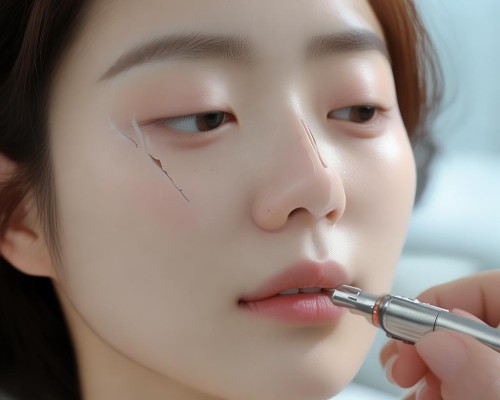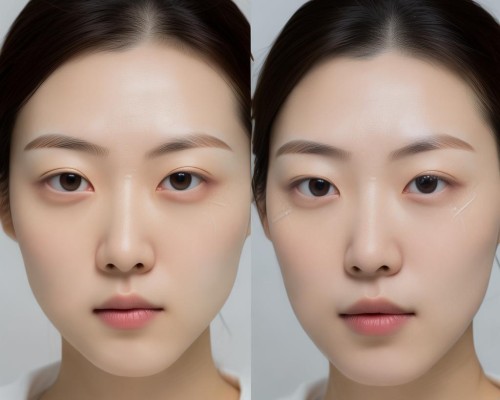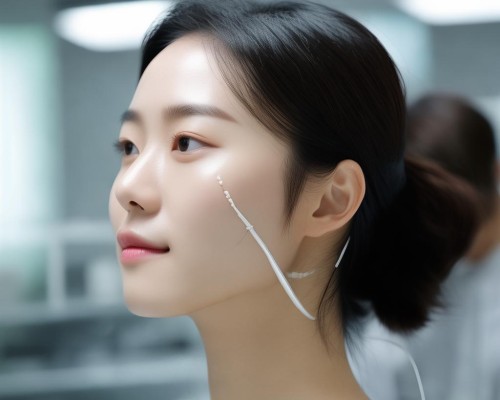

,Full excision of double eyelidsAlthough surgery can effectively improve the eye shape, incision scars are a common concern after surgery. The formation of scars mainly results from individual scar constitution, postoperative infection, improper incision suture techniques, and postoperative care. Factors such as premature suture removal, excessive activity, and inflammatory response. Typical manifestations include redness, swelling, pain, and exudation at the incision. Hypertrophic scars may appear after healing (raised, red, hardened), depressed scars or pigmentation. The repair strategy needs to be selected according to the type and maturity of the scar. External use of drugs, pressure therapy or silicone patches can be considered in the early stage; local injection of corticosteroids can be considered for hypertrophic scars or Laser treatment; For scars with obvious depressions or poor shapes, scar repair surgery can be considered, such as redesigning the incision and fine suturing after the scar tissue is removed. The entire process requires evaluation by a professional doctor and formulating a personalized plan.
Mechanism of formation of double eyelid scars after total resection
total resectiondouble eyelidsSurgery is a kind of operation in which part of the eyelid skin and tissue is removed to form folds of double eyelids. During the operation, the incision will inevitably cause tissue damage and trigger the body's repair mechanism, thereby forming scar tissue. The formation of scars is a complex physiological process, mainly including three stages: inflammation stage, proliferation stage and remodeling stage.
During the inflammation period, surgical trauma will cause congestion and edema of local tissues, and immune cells will gather to remove necrotic tissue and pathogens. At this stage, fibroblasts on the edge of the wound begin to be active and secrete a large amount of collagen, laying the foundation for wound healing.
After entering the proliferative stage, fibroblasts continue to proliferate and collagen secretion increases. However, the collagen fibers secreted at this time are arranged irregularly, causing thickening and hardening of scar tissue. Vascular proliferation and the release of inflammatory factors will also aggravate the formation of scars.
During the remodeling period, the scar tissue gradually matures, the collagen fibers are rearranged, and the scar gradually softens and smoothes. Some beauty seekers may develop excessive scar hyperplasia or keloid at this stage, seriously affecting the appearance and function.
Clinical manifestations of total excision of double eyelid scars
The manifestations of total excision double eyelid scars are diverse, mainly depending on factors such as individual differences, surgical techniques, and postoperative care. Common scar manifestations include:
-
flat scar: The scar tissue is flush with the surrounding skin, the color is close to normal skin color, the appearance is relatively natural, and there is usually no obvious functional effect.
-
depressed scar: Excessive shrinkage of scar tissue causes depression of eyelid skin, affects the natural shape of double eyelids, and may even affect the function of opening eyes.
-
hyperplastic scar: Scar tissue overgrows, forming protrusions higher than normal skin, ruddy color, hard texture, and obvious touch.
-
keloid: Scar is not only limited to the original incision, but also spreads to surrounding tissues, forming a huge scar mass that exceeds the scope of the original operation, often accompanied by symptoms such as itching and pain.
-
pigmentation or depigmentation: The scar area may have pigmentation (darker color) or depigmentation (lighter color), which may affect the appearance.
-
功能障碍: Severe scars may cause eyelid ectropion and entropion, and even affect eye movement, causing symptoms such as difficulty opening eyes and dry eyes.
Factors affecting the formation of scar on double eyelid after total resection
Scar formation is influenced by many factors, and understanding these factors can help prevent and reduce scar problems:
-
individual differences: Different races, genders, and ages have different reactions to scars. Keloid is more common in Asians, and the incidence rate in women is higher than that in men.
-
genetic factors: Family history is a high risk factor for scar formation, and hereditary abnormalities in collagen synthesis may lead to scar constitution.
-
surgical technique: The design of the incision and the precision of the surgical operation directly affect the formation of scars. Excessive incision, too deep separation of layers, and incomplete hemostasis may all increase the risk of scars.
-
postoperative care: Post-operative infection, excessive activity, irregular suture removal time, premature makeup, etc. may all aggravate scar formation.
-
炎症反应: A strong infection or inflammatory reaction in the wound after surgery will stimulate the excessive proliferation of fibroblasts and lead to worsening of scars.
-
hormone levels: During periods when hormone levels fluctuate during adolescence, pregnancy, and menstruation, the risk of scar hyperplasia increases.
Repair strategies for total excision of double eyelid scars
Faced with fully cut double eyelid scars, beauty seekers do not have to be overly anxious. Modern medicine provides a variety of repair methods, which can effectively improve the appearance of scars and even restore the natural double eyelid shape.
drug treatment
- Silicone gel or silicone patch: By forming a closed environment, reduce collagen synthesis and soften scar tissue.
- 皮质类固醇注射: For example, triamcinolone acetonide can inhibit fibroblast activity and reduce scar hyperplasia.
- Anti-scar drugs: Such as bleomycin, retinoin, etc., can inhibit excessive collagen secretion.
laser treatment
- 点阵激光: Stimulate collagen regeneration through minor thermal damage and improve scar appearance.
- CO2 Laser: It can accurately remove superficial scar tissue and promote epithelial regeneration.
- pulsed dye laser: Mainly used to improve redness and pigmentation of scars.
surgical repair
- scar lysis: Remove excessive or hyperplastic scar tissue and re-suture it to improve the appearance.
- flap transplantation: Transplant healthy skin into the scar area for large-area scars.
- fat filling: By filling fatty tissue, improve sunken scars and restore the eyelids to their full and natural shape.
other adjuvants
- 压力疗法: Inhibits scar growth through continuous pressure.
- Traditional Chinese Medicine: Such as external application of traditional Chinese medicine, acupuncture, etc., can help improve scar physique.
- nutritional support: Supplement vitamin C, zinc and other nutrients to promote wound healing.
Key measures to prevent total excision of double eyelid scars
Prevention is better than treatment. Here are some suggestions for preventing scar formation:
-
选择经验丰富的医生: Surgical technique directly affects scar formation. It is recommended to choose a plastic surgeon with professional qualifications and good reputation.
-
术后严格遵医嘱: Removing sutures on time, avoiding infection, and controlling the amount of activity are the keys to preventing scars.
-
Scientific care of wounds: Keep the wound clean and dry and avoid friction and external stimulation.
-
早期干预: Once signs of scar hyperplasia are found, seek medical advice promptly to prevent the problem from worsening.